Beyond Hibiki and Yamazaki: Alternative Japanese whiskies you should know
Advertisement
Experiences
Across Hibiki and Yamazaki: Culling Japanese whiskies you lot should know
Thanks to the Japanese whisky blast, several bottom-known Japanese whisky brands have entered the market. Some bring unique cask-finishes, others infringe fermentation methods from shochu and sake. Here are the most noteworthy labels you can find in Singapore.
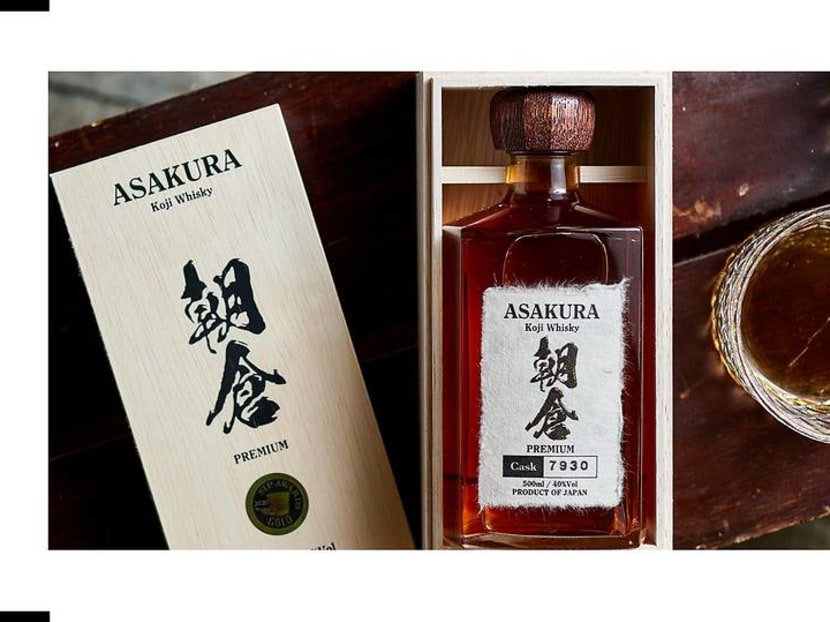
Asakura Premium is a koji whisky which was launched in Jan this year past Japanese spirits producer Kyushu Spirits. (Photograph: Kyushu Spirits)
26 Mar 2022 06:30AM (Updated: ten Jul 2022 04:52AM)
Mention Japanese whisky and y'all'd call back of names like Yamazaki and Hibiki, labels that have been making headlines in recent years because of their demand and scarcity.
The aura of Japanese whiskies and the beloved for all things Nihon hither have drawn lesser-known Japanese whiskies to the local marketplace. Eagle-eyed drinkers would take spotted them at their favourite retailer or restaurant, also.
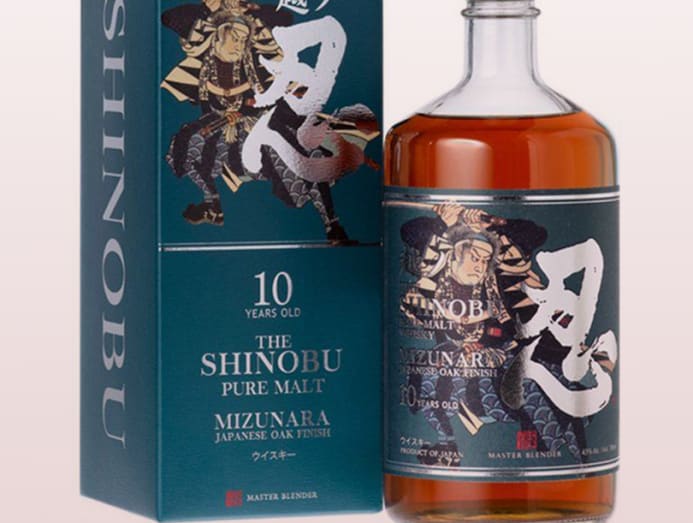
The Whisky Store is distributing a range of malt whiskies from Shinobu, a whisky producer from Niigata. The spirits, which include not-aged and anile statements, aren't entirely made in Japan: Shinobu sources whiskies aged in bourbon and sherry casks from distilleries in Scotland'south Highland and Speyside regions. Afterward blending them, the whiskies are anile for about six months in Mizunara oak casks in Japan.
The Shinobu 10 Years Old Pure Malt, which earned a Category Winner prize at the Globe Whisky Awards terminal year, offers a succulent sip of vanilla, caramel, and coffee notes.
READ> In good spirits: Meet Malaysia's outset contained whisky bottler with a cult following
At Sake Labo, a Japanese tapas and sake articulation on Stanley Street, yous'd find Asakura Premium, a koji whisky which was launched in January this year by Japanese spirits producer Kyushu Spirits. The whisky is also available from Cellarbration.
To those familiar with sake, "koji whisky" sounds like a misnomer; an odd pairing of elements from two unlike types of spirits. Koji whisky is, in fact, a hybrid whisky. Koji is a mould or mucus used for the saccharification (conversion of starches into sugars) of grains in sake and shochu production.
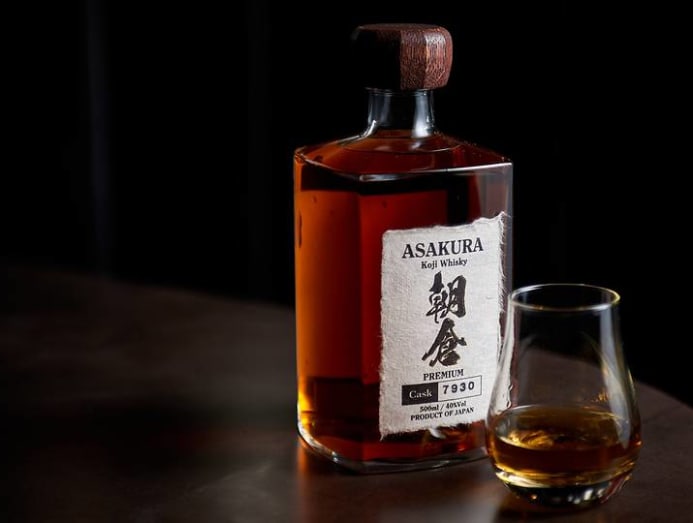
The early on stages of Asakura Premium'south production mirror those of shochu's: Japanese barley is inoculated with koji to start fermentation. The fermented liquid or mash is then distilled, essentially condign an un-aged shochu.
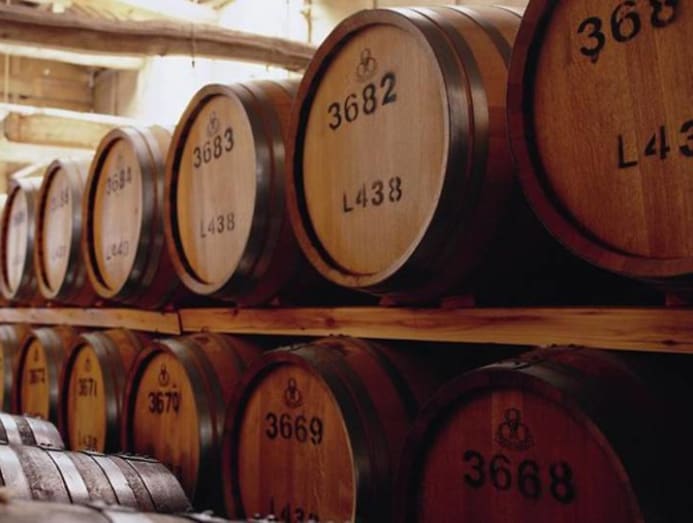
This is where the spirit crosses genres – instead of existence anile in clay or earthen jars typically used for shochu maturation, it is matured in oak sherry casks for almost eight to 10 years. The koji whisky is an easy-drinking sip, offering accents of love, caramel, and brown sugar.
"We'd like to show that besides the other great whiskies [from major distilleries], you can also find other Japanese-blazon whiskies from smaller producers." – Vikramm Chand
READ> viii classic single malts that every whisky enthusiast should know
HYBRID FORMS
Kyushu Spirits' founder and managing director Vikramm Chand, who was born and raised in Nippon, said that fermenting with koji, instead of malting the grains, represents "the Eastern element of our hybrid koji whisky".
Yous might have guessed it past at present. Asakura Premium is fabricated by a shochu producer, Shinozaki, a family-run shochu distillery located in the region of Asakura in Fukuoka Prefecture, Kyushu. The distillery, which doubles upwardly as a sake brewery, has a history that dates back to 1820.
"Many distilleries [in Kyushu] accept a lot of experimental spirits lying effectually. We realised they have the power to produce something good, so why not bring them into the open? We'd like to show that besides the other cracking whiskies [from major distilleries], you tin also observe other Japanese-type whiskies from smaller producers," said Chand, who plans to introduce Kyushu Cowboy, another range of koji whiskies, to the market place shortly.
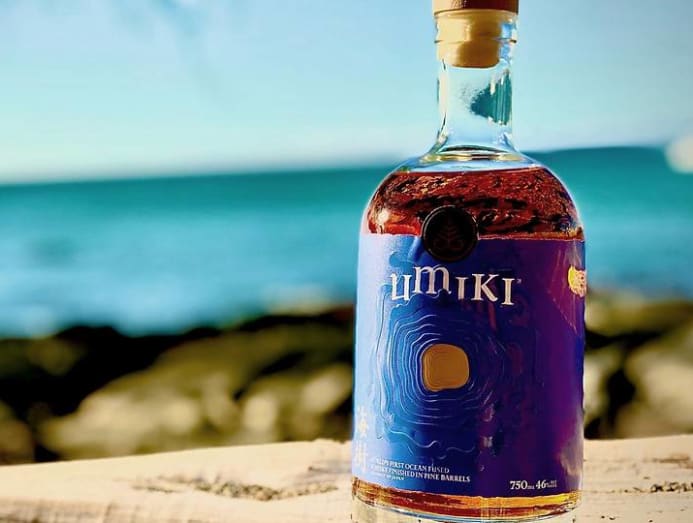
Two years ago, Malt & Wine Asia, a vino and spirits importer, began distributing lesser-known, award-winning Japanese whisky labels: Kura and Reki whiskies from Okinawa-based distillery Helios; Kamiki, a trio of blended whiskies from Nara; and Umiki, a composite whisky fabricated with desalinated seawater from Osaka. The brands apply imported and local whiskies for their spirits before bottling them in Nihon.
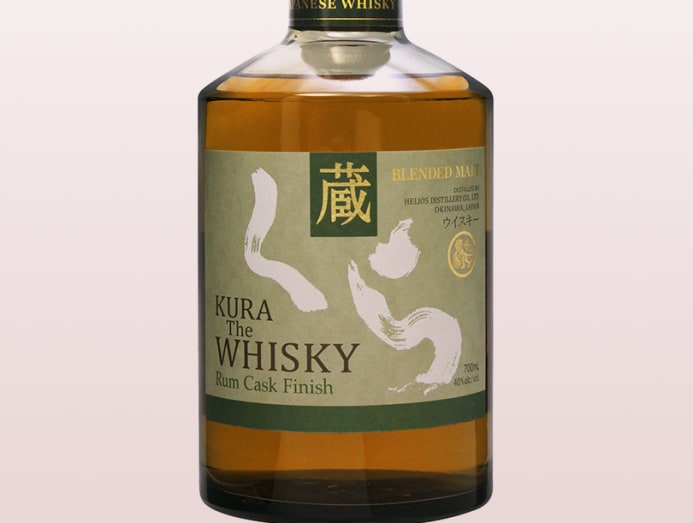
Alex Yong, managing director of Malt & Wine Asia, said: "I'1000 an advocate for New Earth whisky. Do any way you want simply be honest about the provenance. If you lot use imported whiskies, and then say so. If y'all can blend them very well and make something nice, so kudos to you."
Some of the whisky offerings in a higher place come with distinctive Japanese cask finishes: Kura The Whisky Rum Cask Finish, a creme brulee-ish whisky finished in Japanese rum casks (Helios distillery is also a rum producer); Kamiki'due south Composite Malt Whisky and Intense Malt Whisky, a pair of incense-scented spirits finished in Japanese cedar casks from Nara; and Kamiki's Sakura Malt Whisky, a sakura cask-finish dram that offers a swirl of sandalwood, cerise, and floral notes.
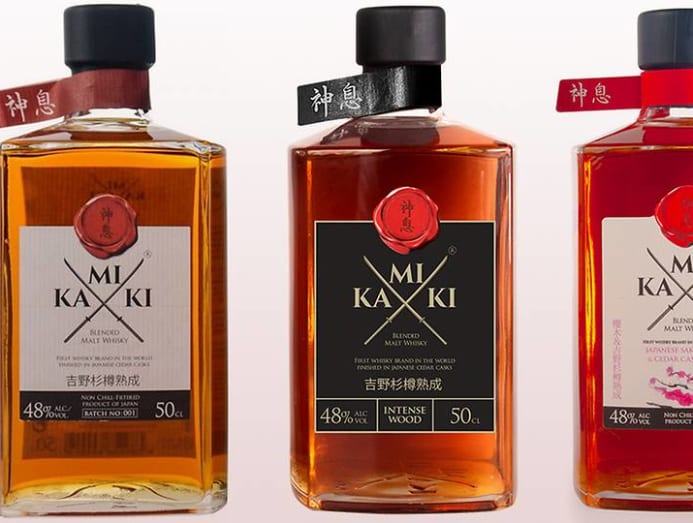
"When I was researching these whisky brands, I saw how Kamiki was dealing with cedar and sakura casks. I thought that was very interesting," said Yong. "It'due south something different from Mizunara oak, which was what every whisky maker seemed to be using a few years ago."
Yong added that there will e'er be a market for lesser-known Japanese whiskies because newer and younger drinkers are more adventurous and "don't conform to the old means". "There are so many brands to explore," he said. "It's like golf game. You don't play at the same golf course week in, calendar week out."
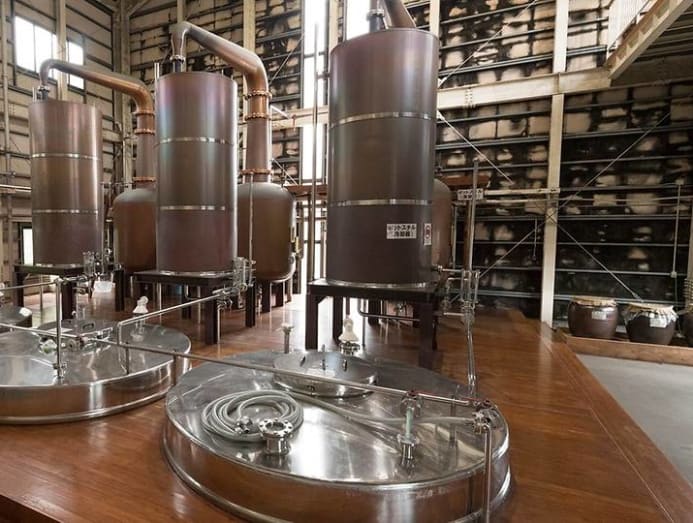
Malt & Wine Asia also carries ii cask-aged awamori – an 8-twelvemonth-erstwhile and a 12-twelvemonth-old – from Kura. (Awamori, an Okinawan tipple, is a distilled spirit, much like shochu. While shochu is made from barley or Japanese curt grain rice, awamori uses long grain indica rice. Awamori is normally aged in clay vessels, so a cask-aged awamori is quite rare.) The 12-yr-old is peculiarly delicious; a heady potion of maple, caramel, and banana flavours.
Malt & Wine Asia'south cask-aged awamori from Kura are marketed every bit whiskies, which may enhance purists' eyebrows. The Whisky Store besides carries a similar product, the Kujira Ryukyu Single Grain Whisky, a cask-aged spirit fabricated from indica rice.
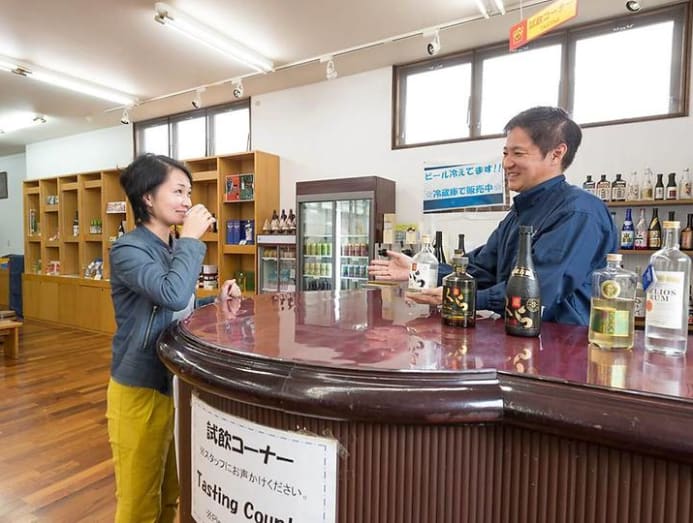
In that location are semantics to exist argued here. In its simplest definition, whisky is a spirit made from distilled grains. Since rice qualifies as a grain, is information technology a stretch to characterization a spirit distilled from information technology as a whisky?
Who calls the shots on what a Japanese whisky should be or could be? Until recently, no i.
For years, the Japanese whisky industry has had lax regulations apropos whisky production. It'southward an open up hole-and-corner that even major distilleries use imported barley or source whiskies from Scotland before blending and ageing them in Nippon and selling them as Japan-made whiskies – an arrangement that is akin to the assembly of your favourite Swiss watch (do all its parts come from Switzerland?).
The absence of a minimum ageing rule ways Japanese whisky producers need non be transparent nearly the number of years their non-aged drams have spent in oak, although some makers – when nudged – would tell y'all "3 years", referencing the Scottish law.
All the creative liberty and supposed dominion-bending that Japanese whisky makers enjoy may come up to an terminate soon.
A NEW STANDARD
Concluding calendar month (February 2021), the Nippon Spirits and Liqueurs Makers Association (JSLMA) announced a new ready of rules regarding Japanese whisky production: Raw ingredients such as malted grains, cereal grains, and water must be extracted in Nihon. Malted grains must e'er be used. Fermentation, distillation, ageing, and bottling must also be done in Japan. The three-year minimum ageing law is likewise spelled out.
This means that brands like Shinobu, Kura, and Kamiki would no longer be considered Japanese whiskies nether the new manifesto unless they go entirely local in their provenance and product. Even Asakura Premium, with its local barley, would autumn outside of the new guidelines since the grains are not malted.
There is a catch, though. JSLMA'southward rules apply but to its members – big boys Suntory and Kirin are in the guild – which ways non-members don't have to attach. The new rules are also not legally binding.
READ> Now in Singapore: A rare collection of the world'due south oldest Scotch whiskies
"We welcome the move [from JSLMA] equally information technology finally defines what Japanese whisky is, and levels the playing field. Information technology will benefit consumers equally they tin can decide whether they are buying Japanese whisky or an international whisky from Japan," said Yong. "The new rules will aid postage stamp out fake Japanese whiskies, as some brands may non even exist bottled in Japan but nonetheless acquit 'Japanese whisky' on their labels.
"Nosotros hope the new standards will bring near new innovation, creativity, and amend quality and so that we tin continue to enjoy our tipples from Nihon."
JSLMA has highlighted a transitional phase, stipulating that members who currently don't meet the criteria can use their existing labels until March 2024. Not everyone has the wherewithal to ferment and age their whiskies locally, allow lone source local ingredients. Who knows? The new guidelines may simply encourage the growth of "rebel", not-conformist Japanese whiskies from smaller producers.

0 Response to "Beyond Hibiki and Yamazaki: Alternative Japanese whiskies you should know"
Postar um comentário